How to get rid of ground elder
Here is the fact that explains everything else about this weed: what pushes up out of your soil is not a stem, it is a leaf stalk. Every stem ground elder has, bar the flowering one, stays underground, along with a bud every four or five centimetres. That is why a fork makes the patch bigger, why one spray never finishes it, and why the answer is a programme rather than an afternoon.
By The Weed GuyLast updated
The short version
Pick one route and stick to it. If you are spraying, hit it with a systemic glyphosate on full fresh leaf in late spring, again on the regrowth in early summer, and again in early autumn while it is still green, then do the same next year. If you are digging, do it properly in one go, lifting and cleaning the plants you want to keep, because a half-hearted dig snaps the rhizome mat into pieces and each piece with a bud on it is a new plant. What does not work, at any strength: vinegar, boiling water, salt, or taking the tops off.
The two-season programme, and why each step sits where it does
Nobody on the first page of Google gives you a schedule with reasons attached. This is mine, built from the plant's own biology: when it has the most leaf, when it is moving reserves downwards, and when spraying it is a waste of a tank.
| When | What you do | Why that moment |
|---|---|---|
| Before you touch it | Make sure it is ground elder | It is an umbellifer, the same family as hogweed and giant hogweed. Thirty seconds with the leaf and the flower head settles it, and it is worth spending. |
| Early spring, as the first leaves unfold | Pick one route: dig it or spray it | Digging breaks the rhizome mat into pieces and spraying needs leaf to travel through. Doing half of each in the same season gets you the worst of both. |
| Late spring into summer, around the time it flowers | First glyphosate pass, at the label rate | This one is not my invention. The Roundup Ultra label names ground elder and says to treat it around the time of flowering, which is when it carries its maximum leaf area and is moving material through itself fastest. |
| The two to four weeks after that | Nothing. Leave it be | The label puts it as effects showing within one to four weeks. Anything that browns within a day has burnt the leaf and missed everything that matters underneath. |
| Early to mid summer, on whatever came back | Second pass on the regrowth | Regrowth comes back low, soft and evenly spread, which is easier to wet thoroughly than a knee-high tangle. Each pass takes another slice out of the reserves. |
| Late summer into early autumn, while it is still green | Third pass | The plant is moving its reserves down into the rhizome to overwinter. A systemic goes down with them, which is the one time of year you get a free ride. |
| Deep winter | Stop. Do not spray | It sits out the winter as dormant buds on the rhizome with nothing moving through the plant, so there is nothing to carry a weedkiller anywhere. |
| The following spring | Expect regrowth, and treat it as the plan | A fragment with no bud on it can form a callus and only push up shoots months later. Season two is the programme working, not evidence that season one failed. |
| Once the ground is genuinely clear | Plant it up or edge it | Bare soil is an invitation, and rhizome can still be creeping in from a neighbour at anything up to 90cm in a year. |
The exact count, three passes a season across two seasons, is my plan rather than a published figure, and I would rather say so than dress it up. The direction of travel is not mine though, and it comes from two independent places. The RHS says that because the roots are so extensive, numerous applications of a systemic weedkiller are necessary and it is not a quick or easy option. And the Roundup Ultra label itself carries a footnote naming ground elder as one of the weeds that may need a repeat treatment if regrowth appears, which is the manufacturer telling you on the pack that one pass may not finish it. The schedule above is my reading of where those applications land hardest.
Check it is ground elder before you do anything
This matters more here than on most weeds, because ground elder is an umbellifer and so are two plants you should not be handling casually.
Umbellifer means the flower head is an umbel: dozens of tiny flowers on spokes, forming a flat plate. Cow parsley does it, hogweed does it, and so does giant hogweed, whose sap blisters skin in sunlight. They are all the same broad shape from ten feet away, which is exactly the distance most people identify a weed from.
Ground elder is the small one. The numbers do the work:
- Height 30 to 60cm, occasionally to a metre. If it is taller than you, it is not ground elder. Giant hogweed reaches five metres and common hogweed around two.
- Flower heads 2 to 6cm across, made of 10 to 20 spokes carrying white flowers about 2 to 3mm each. Common hogweed’s umbels run nearer 20cm and giant hogweed’s up to 60cm. A dinner plate is a hogweed. A coaster is ground elder.
- Leaves in threes, groups of three toothed leaflets, fresh green and going yellower through summer. Cow parsley’s leaf is finely divided and lacy by comparison, nothing like this.
- Hollow, grooved, hairless leaf stalks. No bristles, no purple blotching. Purple blotches and stiff white hairs on a thick hollow stem are giant hogweed and a reason to walk away.
- Flowers late spring into summer, roughly May to July depending on which flora you read, and some years running on into August. Ridged oval seed capsules about 4mm long follow.
- Crushed foliage and roots have a distinct smell that gardeners who have dug it recognise instantly. Not a diagnostic on its own, but a useful confirmation once you have met it.
One more mix-up worth clearing up because the name causes it: ground elder has no relationship to an elder tree. Elder is woody, ground elder is not. The leaves have a passing resemblance and that is the whole of the connection. Its other names, goutweed and bishop’s weed, come from its history as a herb for gout, which is also where the botanical name podagraria comes from.
The plant is underground, and the bit you can see is a leaf stalk
Get this one fact straight and every other piece of ground elder advice either makes sense or falls apart.
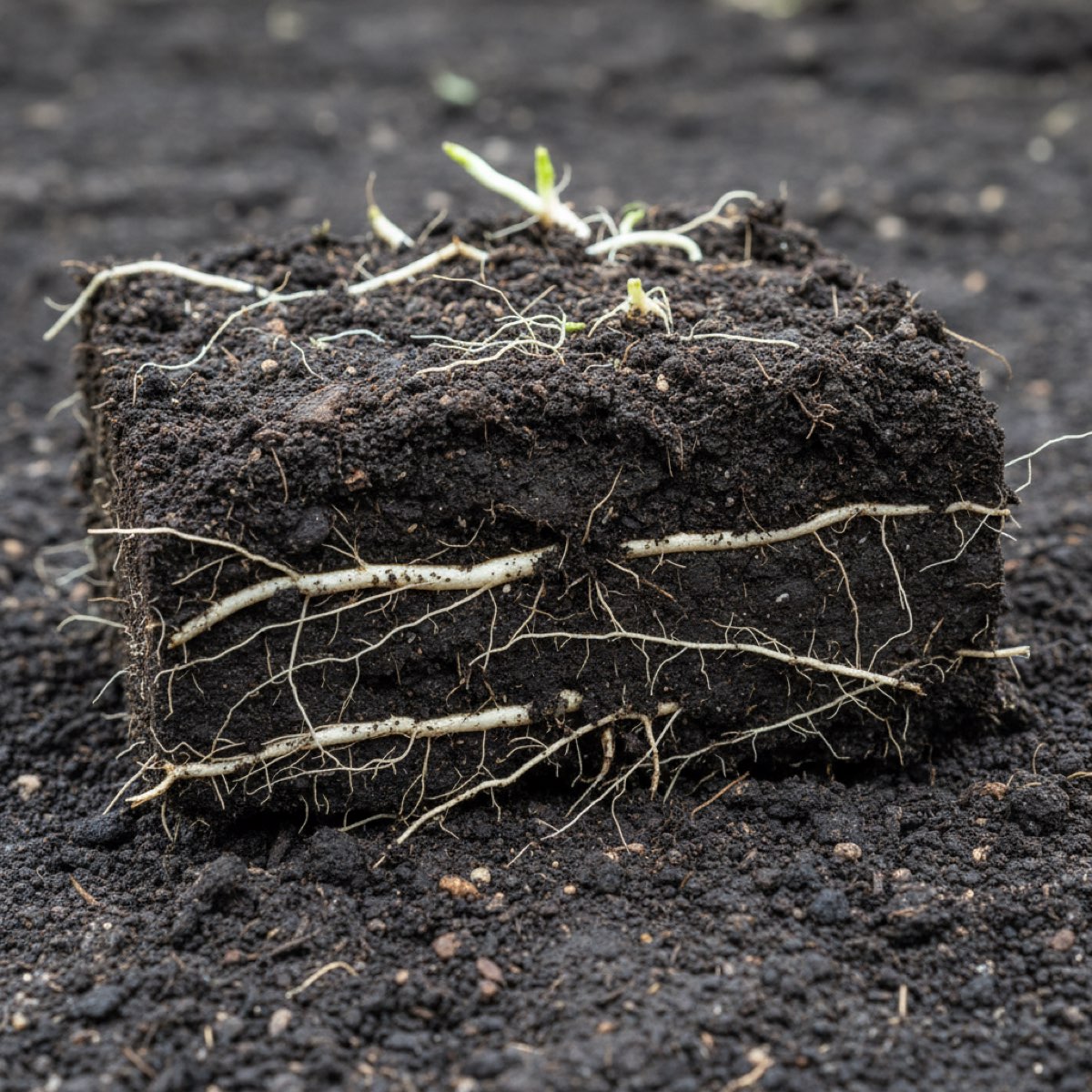
The organic-growing review that Garden Organic publishes on this species, compiled from the older botanical literature, records something no gardening page mentions: it is the leaf stalk, not the stem, that emerges above ground, and every stem the plant has apart from the flowering shoot stays below the surface. Ground elder is, functionally, a subterranean plant that puts leaves up through the soil like a periscope.
Line that up against what people try, and the results stop being mysterious:
- A contact spray cannot win. Vinegar, a pelargonic acid product, a flame weeder, boiling water. They destroy what they touch. What they can touch is leaf stalks and leaflets, and the structural plant, the stems, the buds and the stored reserves, is all underneath, untouched.
- Cutting and strimming barely register. Take the tops off ground elder and you have pruned the leaves off a plant whose body is intact. Mowing does work on a lawn, but that is a relentless weekly regime rather than a treatment, and it only works because it never lets a leaf get established.
- A systemic has to be carried in. Glyphosate only reaches the rhizome by being absorbed through leaf and travelling with the plant’s own sugars. That is why leaf area and timing decide whether a pass was worth doing, and why the systemic-versus-contact distinction is the whole ball game on this species.
Now the rhizome itself. Two to five of them form at the base of every tuft of leaves. They are white while young, going creamier with age, and they run sideways through the top layer of soil at anything from 15 to 90 centimetres a year. Along each one, scale leaves sit at 4 to 5 centimetre intervals, and there is a bud in the angle of every single one, each capable of becoming a branched rhizome in its own right.
So put a spade through 40cm of rhizome and you have not damaged a plant. You have issued about eight new ones with their own growing points, and buried them at the depth they most like.
How deep the roots really go, and why that is the wrong question
You will read that ground elder roots go notoriously deep. They do not. The RHS describes a shallow rhizomatous system forming a dense mat, and the gardeners who document digging it out describe tracing brittle white roots along just under the surface rather than following anything downwards. The reputation comes from it being impossible to get all of, which people reasonably but wrongly translate into depth.
The best evidence on this is a 1966 experiment cited in that Garden Organic review, and it is oddly reassuring. Rhizome fragments were buried at 30, 60 and 90 centimetres in a sandy loam. Not one fragment, at any of those depths, managed to reach the surface. What they did do was produce 4 to 21 centimetres of shoot and leaf growth underground before running out of reserves. Deep burial defeats it. Deep roots are not the problem.
The real problem is what a fragment does near the surface, and there are two versions of it. A piece carrying a bud develops readily into a new plant, which is the bit every page tells you. The second version is the one that explains the misery: a fragment with no bud on it forms a callus, and that callus can produce adventitious buds after several months, which then grow into shoots. That is the mechanism behind the experience everybody reports. You clear a bed, it stays clean, you allow yourself to believe it, and the following spring it is back. Nothing was missed. Something that was not a plant when you dug it became one while you were not looking.
Seed matters far less. It sets seed, but fresh seed needs a cold period before it will germinate, it is short-lived, and it does not travel far from the parent plant. Deadhead the flower heads by all means, but nobody has ever lost a garden to ground elder seed. Vegetative spread is the entire story, which is why it sets the same trap bindweed does with its snapped root fragments, and why the same square metre keeps producing weeds long after you thought it was dealt with.
Why the fork usually makes it worse, and the version of digging that works
Ground elder rhizome is brittle. It snaps rather than pulls, which is the single most important handling fact about it and the reason a fork behaves so differently here than it does on a nettle. On nettles, most of the root sits in the top 20cm and a border fork genuinely gets under a young plant. On ground elder, the fork tines pass through the mat and leave you holding a 10cm souvenir while the rest stays put, in pieces, each piece with buds every few centimetres.
Which is why the honest advice is not "never dig". It is that a single dig will not do it. That is the settled position in the organic literature going back to the 1920s and 1930s: hoe or dig repeatedly to exhaust the creeping rootstock, and understand that one cultivation will not suffice. Everything turned up gets collected and burnt, never composted. One session with a fork multiplies the patch. A programme of sessions wears it down. The catch is that almost nobody will keep a programme like that up for two or three years, so the plan you actually stick to matters more than the plan that would theoretically win.
So the decision rule I would use:
- A new, small patch in open soil: dig it, and dig it seriously. Border fork in to its full depth, take a wide margin around the visible leaves, and go back over the same ground every few weeks all season.
- An established mat threaded through a planted border: do not dig around your plants. The RHS route is to lift the perennials you want to keep while they are dormant, wash and pick every scrap of rhizome out of their roots, clear the ground properly, then replant. Brutal, and the only version that actually resets a border.
- A big patch you can afford to write off: leave the spade in the shed and spray it on the schedule above. Digging first destroys the leaf area the weedkiller needed. And if you spray and then decide to dig anyway, the label wants at least seven days first, so the weedkiller has actually reached the roots before you disturb them.
- In a lawn: mow it. Regular mowing genuinely holds ground elder down, because it never gets to establish a leaf. This is the one situation where doing nothing special is the right answer.
What the Roundup Ultra label actually says about ground elder
Not brand copy. These are lines off the approved amateur label, which is where the useful specifics usually hide, and it names this weed twice.
Roundup Ultra is a soluble concentrate containing 360 g/l glyphosate acid, approved for amateur use, MAPP number 18850. I read the label rather than the marketing, and five things on it are worth having before you mix anything.
- Where the label puts ground elder. In its annual and perennial weeds table, ground elder sits in the row for tough perennial deep-rooted and broad-leaved weeds, alongside bindweed, dandelions, docks and thistles. That row asks for 15ml in a litre of water, treating about 30 square metres. Annual weeds like chickweed get 10ml for the same area. So the label already grades it as one of the difficult ones.
- When to treat it, by name. That same row splits its timing in two. Dandelions and docks get treated when actively growing, usually April to October. Bindweed, ground elder and thistles get treated "around the time of flowering". A named window for this species, which is more than most weeds get.
- Expect to go again. Two of the names in that row carry an asterisk, and they are ground elder and thistles. The footnote reads that some tough weeds may need a repeat treatment if regrowth appears, and the two examples it gives are horsetail and ground elder. That is the manufacturer, on the pack, in writing.
- Effects within one to four weeks, and rain within six hours of spraying may reduce how well it works. Nothing here is quick, and nothing visible after five days is normal, not a failed pass.
- Wait a week before you put a fork in. For dense cover including perennial weeds, the label says to leave at least seven days for the weedkiller to move to underground roots and shoots before digging or cultivating the soil. On ground elder that instruction is doing more work than it looks. Dig on day two and you have cut the supply line to the only part of the plant you were trying to reach, and chopped it into pieces on the way.
Now the tension in that timing, because it is real and I would rather name it than gloss over it. Flowering is when the plant is spending on seed, not stocking the rhizome, and the general rule on perennial weeds is that a systemic travels furthest downwards when the plant is already sending reserves that way, in late summer and autumn. So why does the label pick flowering?
Because getting the weedkiller in comes first. Around flowering, ground elder is carrying its maximum leaf area and moving material through itself at its fastest, which is exactly what absorption and translocation need. The autumn advantage is a different thing: it is about where the material ends up once it is in. Those are two halves of one problem, which is why I would not pick between them. Take the flowering pass because that is when you can get the most into the plant, and take a later pass because that is when what goes in gets carried furthest down.
Ground elder also lets you off a hook that nettles do not, where the whole job hangs on cutting before it seeds. Ground elder seed is short-lived, needs a cold spell before it will germinate and barely travels from the parent plant, so there is no reason to rush a pass in before the flower heads open. Letting it flower and spraying it then costs you nothing.
One honest caveat: that is one amateur label, and other products word their instructions differently. Read the bottle in your hand rather than this page, and get the dilution right, because mixing is where most concentrate gets wasted.
What I would buy for a ground elder programme
One product, not a shopping list, and a reason not to buy the other thing. This is not a comparison test and I will not pretend it is: it is the published specification read against what this particular job needs, plus the themes that come up repeatedly in what buyers report.
What I’d use
Glyphosate concentrate, 360 g/L
Gallup Home & Garden Glyphosate Weedkiller (1 litre)
The one Gallup a homeowner can legally buy and use: a 1 litre glyphosate concentrate at 360 g/L, approved for home and garden use under MAPP 17672.
It is the same active, the same 360 g/L loading and the same isopropylamine salt as the professional Gallup XL, and its single label rate of 24 ml per litre of water is exactly the rate the professional labels reserve for perennial broad-leaved weeds. What the two labels set apart is the authorisation printed on them rather than the strength, and this is the side of that line you are allowed to stand on.
- Active ingredient
- Glyphosate, 360 g/L, as the isopropylamine salt
- Formulation
- Soluble concentrate you dilute yourself
- Approval
- MAPP 17672, labelled for use only as a home and garden weedkiller
- Mixing rate
- 24 ml per 1 litre of water, per the label
- Coverage
- 40 sq m per litre of made-up spray, so roughly 1,667 sq m per bottle
- Rainfast
- Rain within 6 hours may reduce effectiveness, per the label
- Size
- 1 litre of concentrate
Watch out for
- No measuring cap in the bottle. Check a cup arrives, or the dose is guesswork.
- One re-treatment a season, and it takes four weeks. Do not go again early.
- Not for lawns. It is non-selective and takes the grass too.
- Resellers dominate the listing, so check the label that arrives is Barclay.
- "Super strength" is keyword stacking. It is 360 g/L, same as professional Gallup XL.
That’s an affiliate link: buy through it and I earn a small commission at no extra cost to you. It doesn’t change what I recommend or what I say is wrong with it. More on how that works in the affiliate disclosure.
The reason a concentrate rather than a ready-to-use bottle is arithmetic, not snobbery. Ground elder is a six-pass job spread over two years. Four or five passes at ready-to-use prices is where people quietly give up halfway through season one, and a half-finished programme on this plant is money and effort thrown away entirely. Getting the dilution right is the whole skill, and the concentrate strengths and mixing arithmetic are worked through separately because that is where most bottles get wasted.
What I would not buy for this: a knapsack sprayer. Ground elder is usually a border or a patch rather than a driveway, so a 5 litre pressure sprayer holds more than you need for a pass, and a knapsack only earns its money on volume work. I would also avoid anything sold as a path and drive weedkiller, because the residual in it is designed to keep ground bare, which is the opposite of what you want in a bed you intend to replant. And there is no selective option here: nothing takes out ground elder and spares the perennials it is growing through, which is why the lift-and-clean route exists.
Will vinegar kill ground elder?
No, and the RHS says so directly on its own ground elder page: vinegar is not an effective control method. But the reason is more interesting than the verdict, because it tells you the answer for every other kitchen remedy anyone will suggest.
Acetic acid kills the plant tissue it physically wets and moves nowhere afterwards. On a weed that keeps its stems and growing points above ground, that at least does something visible. On ground elder, the tissue you can wet is leaf stalks and leaflets, and the stems, the buds and the reserves are all under the soil where nothing you pour will reach them. It is not a question of strength or of buying the stronger horticultural stuff. There is no dose of a contact treatment that reaches a plant which lives downstairs.
Same for boiling water, which acts at the surface, and salt, which degrades soil structure and stops water moving through the ground, and which you would then be expecting to grow plants in. The full sourced verdict on the homemade recipes sits on its own page, including the three-ingredient one doing the rounds, and the short answer on home remedies generally is there too.
Smothering, ground cover, and the Mexican marigold argument
Two pages in the current top ten flatly contradict each other on this, and neither mentions the other. Worth resolving, because it decides how you spend a season.
Light exclusion does work on ground elder, at the timescale the plant dictates rather than the one you would like. The RHS specification is about 20cm of bark or wood chip, or a heavy-grade biodegradable mulch matting, with the soil kept covered for a few years and topped up as it settles. A few years is the number to plan around. Cardboard is the version that fails, and it fails for a reason people do not anticipate: it rots down long before a rhizome mat exhausts its reserves, so the patch simply carries on underneath and reappears through the gap. If you are going to smother ground elder, choose a covering that will still be a covering in three years.
Dense, low ground-cover planting that holds its leaves through the year does help, though understand what it is doing: it competes, it does not kill. It slows the patch and keeps it looking under control while you get on with treating it.
Which brings us to Mexican marigold, Tagetes minuta, and the reason to be careful about what you read on this weed. It gets recommended as the most effective option on the strength of a well-known garden having cleared a flowerbed with it. Against that, a gardener who documented his own two seasons of trying exactly that reported it had no impact whatsoever. There is no trial evidence either way that I can find. So my verdict is not that it definitely does nothing. It is that a single garden anecdote is not enough to plan a season around, and if you want to try it, try it alongside something that works rather than instead of it.
Ground elder along a path edge, in gravel, or coming under the fence
Ground elder advice almost always assumes a border. Plenty of people meet it somewhere else: in the gravel strip down the side of the house, along the edge of a path where the mower cannot reach, in the joints at the foot of a wall, or appearing on their side of a fence panel year after year with the parent plant next door.
There is a specific reason it shows up on the far side of hard surfaces, and it comes out of that 1966 burial trial. Fragments buried deep could not reach the surface, but they still pushed 4 to 21 centimetres of growth through the soil looking for it. A rhizome running under a slab or a path is doing the same thing on a bigger scale: travelling blind under a surface you cannot lift and surfacing at the first gap it finds. So the leaves in your path joint may be attached to a plant a metre away in a bed you have already cleared. Treat what you can see and it will keep appearing, because you are killing leaves off a plant you have not located.
The good news on a hard surface is that the job gets simpler. There is nothing green to protect, so a systemic gets a clean run, and glyphosate is deactivated on contact with soil, so it leaves no residue to worry about in a bed alongside. What it also means is that spraying does nothing to stop the next seed germinating in the same joint, which is a jointing and gravel maintenance job rather than a weedkiller one.
On the boundary, change your goal from killing to containing. Rhizome advances at up to 90cm a year, so if the plant is rooted on the other side you are not going to win by spraying your strip. What stops new ground being invaded is physical: the RHS puts a barrier at 45cm or more deep, which the rhizome mat sits well above, and that is a realistic spec for a garden. Behind the barrier, keep your own side on the annual schedule. You can cut back growth that crosses your boundary, under a long-standing principle that comes from a case about overhanging branches, provided you do not step onto their land to do it. You cannot treat their ground, which is trespass. None of that is legal advice.
You can eat it, which is exactly how it got here
A genuine counterpoint on this species, and one with a warning attached that most foraging write-ups skate over.
Ground elder is not a native accident. It was brought to Britain deliberately, valued as a medicinal and edible plant, and the botanical literature has it probably introduced as a pot herb, first recorded here in 1578 and possibly present in Roman times. It is classed as an archaeophyte, meaning it was naturalised long before 1500. The name goutweed and the botanical podagraria both point at what it was grown for: a remedy for gout and joint pain. The RHS describes the young leaves, raw or cooked, as tangy with a hint of parsley.
Three conditions before anyone reaches for a colander, and none of them are optional:
- Never eat anything off ground that has been sprayed or that you cannot personally account for. That includes a patch a previous owner may have treated.
- Never eat an umbellifer you are not certain about. This is the plant family where a misidentification is a serious matter rather than a disappointing salad. If there is any doubt in your mind at all, the answer is no.
- Eating it is not control. You are removing leaves from a plant whose stems are underground. Nobody has ever eaten their way through a rhizome mat.
There is a wildlife side too, and I would rather give you the real number than a vague appeal to leave a corner for nature. The RHS counts ground elder as a food plant for over 25 species of invertebrate, including beetles, leaf miners, butterflies and moths. That is a genuine cost to clearing every last leaf of it, though it is a fraction of what a nettle stand supports. Worth a thought if the patch is at the back of a wild corner and bothering nobody. Not a reason to leave it in a border it is strangling.
One last thing to ignore: the variegated form sold as a garden plant, said to be less invasive than the plain one. The people who compiled the organic review on this species noted from their own experience that it can spread just as well. Do not plant it on purpose.
About this resource
I am The Weed Guy, one bloke who is qualified to spray professional weedkiller. This page is built on published botany, an approved product label and horticultural guidance rather than a trial of my own, and it says where each figure came from: the RHS on root structure, mulch specification, barrier depth and edibility; the Garden Organic review of the species, compiled for a DEFRA-funded organic weed management project, for the rhizome architecture, the bud spacing, the annual spread rate and the 1966 burial experiment that settles the depth question; and the Roundup Ultra amateur label (MAPP 18850) for the rate, the flowering window, the repeat-treatment footnote and the seven-day wait before cultivating. The two statutes are read on legislation.gov.uk directly, never through somebody else’s summary of them.
Where I have given you a schedule rather than a citation, I have said so plainly. The exact count of three passes a season over two seasons is my reasoning from how the plant behaves rather than a published number, though the direction of travel now has the RHS and the label footnote behind it, and I would rather draw that line than pass off a plan as a finding. Where a claim in circulation had nothing behind it, the deep roots, the Mexican marigold, I have said that too instead of repeating it.
The honest disclosure: no brand pays for a mention here, and the product link above is an affiliate link, so I earn a commission if you buy through it at no extra cost to you. It changes nothing about what goes on the card, which is why the drawbacks sit next to the reasons to buy. The full explanation is on the affiliate disclosure page. And read the label on the bottle in your hand before you mix anything: rates and approvals change, and the printed label beats any figure quoted here or anywhere else.
Common questions
Is ground elder hard to get rid of?
Yes, and it is worth knowing why rather than just being told to persevere. Almost the entire plant lives below ground. What comes up out of the soil is a leaf stalk, not a stem: every stem except the flowering shoot stays under the surface, so the part you can attack is a fraction of the plant. Underneath it is a shallow mat of white rhizome carrying a bud every 4 to 5 centimetres, any one of which can start a new plant. The RHS is blunt that even with a systemic weedkiller, numerous applications are needed. Plan for two seasons and you will not be disappointed. Plan for one afternoon and you will be.
What kills ground elder?
Only two things reach the rhizome: a systemic weedkiller carried down inside the plant, or removing the rhizome physically. Glyphosate is the systemic that is actually available to a homeowner, and it needs repeat passes across more than one growing season because the root system is too extensive to be finished in one hit. Physical removal works, but only if it is genuinely thorough, which in an established border usually means lifting the plants you want to keep, clearing the ground properly, and replanting. Everything else on the usual list, vinegar, boiling water, salt, a strimmer, kills the top and leaves the plant intact.
Will vinegar kill ground elder?
No, and ground elder is the clearest example on this whole site of why. Vinegar is a contact treatment: it destroys the plant tissue it physically wets and travels nowhere. On ground elder, the tissue you can wet is leaf stalks and leaflets, because the stems and the buds are all under the soil. So even a perfect job of spraying reaches almost none of the plant. The RHS says outright that vinegar is not an effective control method for it. It will brown your patch for a fortnight and then the same buds push up again.
Does Roundup work on ground elder?
Yes, and the label says so by name, which is more than you get for most weeds. Roundup Ultra's amateur label (MAPP 18850) lists ground elder in its row for tough perennial deep-rooted and broad-leaved weeds, at 15ml in a litre of water covering about 30 square metres, and tells you to treat it around the time of flowering. What the same label also does is put an asterisk next to it, leading to a footnote saying some tough weeds may need a repeat treatment if regrowth appears, with horsetail and ground elder as its two examples. So it works in the sense that it reaches the rhizome. It does not work in the sense of one bottle and done, and the manufacturer is not pretending otherwise. Effects show within one to four weeks, so expect nothing for the first few days.
What is the best weedkiller for ground elder?
A plain glyphosate concentrate that you dilute yourself. Not because of a brand, but because of the arithmetic: this is a multi-pass job across at least two seasons, and paying ready-to-use prices for four or more passes over a patch is how people end up abandoning the programme halfway. Concentrate works out at pennies per square metre. For a sense of the strength involved, the Roundup Ultra amateur label puts ground elder at 15ml of concentrate in a litre of water for about 30 square metres, against 10ml for annual weeds, so it is asking for half again on this species. What you should not buy for ground elder is a path-and-drive product with a residual in it, because ground elder is usually a planted-border problem and a residual is designed to keep ground bare. And there is no selective weedkiller that takes out ground elder and spares the perennials it is growing through.
How much weed killer do I actually need for a patch of ground elder?
Far less than most people buy, and the label lets you work it out rather than guess. Roundup Ultra's amateur label (MAPP 18850) puts ground elder at 15ml of concentrate in a litre of water, treating about 30 square metres. Do the arithmetic and a litre of that concentrate makes enough spray to cover roughly 2,000 square metres at ground elder rate. A 20 square metre border therefore takes about 10ml a pass, so the full six-pass programme on this page is somewhere near 60ml of concentrate spread over two years. That is my arithmetic off the label rate, not a figure printed on the pack, but it settles the buying question: a small bottle of concentrate covers the whole job several times over. Where the money actually disappears is buying ready-to-use bottles for a six-pass weed.
Is there a weed killer for ground elder that will not kill my plants?
No, and that is the genuinely hard part of this weed rather than a gap in the market. Ground elder is a broadleaved perennial growing through broadleaved perennials, so anything that kills it kills them. There is no selective product that spares the border. The two ways round it are both about placement rather than chemistry. Either treat the ground elder leaf on its own, a clump at a time, shielding whatever you want to keep, which works and is slow and needs a still day; or take the RHS route of lifting the plants you want while they are dormant, washing every scrap of rhizome out of their roots, clearing the ground properly and replanting. One thing in your favour: glyphosate is deactivated on contact with soil, so it leaves no residue in the bed to catch what you plant afterwards. The damage is only ever to green leaf it lands on at the time, which is why drift is the thing to manage.
How deep do ground elder roots go?
Shallower than its reputation. The RHS describes a shallow rhizomatous root system forming a dense mat, and the reason people think it is deep is that it is impossible to get all of, which is a different problem. The best evidence on depth comes from a 1966 trial that buried rhizome fragments at 30, 60 and 90 centimetres in sandy loam: not one of them managed to reach the surface from any of those depths, though they did produce 4 to 21 centimetres of shoot and leaf growth underground before giving up. So depth is not what beats you. Sideways spread and fragment regrowth are.
Can I put ground elder roots in my compost?
No. A home compost heap does not get hot enough to kill a rhizome, so all you are doing is making a nursery and then spreading it round the garden with your own compost. The organic-growing advice going back decades is that rhizomes turned up during digging should be collected and burnt. If burning is not an option where you are, council green waste is processed at temperatures a garden heap never reaches. Young leaves are fine to compost. Anything white and root-shaped is not.
Will covering ground elder with cardboard or black plastic kill it?
Eventually, if you commit to it properly, and the honest timescale is years rather than a season. The RHS route is about 20cm of bark or wood chip, or a heavy-grade biodegradable mulch matting, with the soil kept covered for a few years while the plant exhausts itself. Cardboard alone is the version that fails most often, because it rots down long before the rhizome runs out of reserves and the patch simply carries on underneath. If you are going to smother, plan the covering to still be doing its job in three years, not three months.
Is ground elder the same as an elder tree?
No relation at all. Elder is a woody shrub in the honeysuckle family; ground elder is a soft-stemmed umbellifer, the carrot and parsley family. The name comes from the leaves looking a bit like a young elder's, which is a real resemblance and a genuinely unhelpful one. If what you are looking at has bark, it is not ground elder. Its other names, goutweed and bishop's weed, come from its old use as a medicinal herb for gout.
Is ground elder notifiable or illegal in the UK?
No. It is not named in Schedule 9 of the Wildlife and Countryside Act 1981, the list that carries the offence of causing Japanese knotweed or giant hogweed to spread into the wild, and it is not one of the five injurious weeds named in the Weeds Act 1959, which are spear thistle, creeping or field thistle, curled dock, broad-leaved dock and ragwort. There is nothing to declare, nothing to report and no mortgage question attached to it. If a neighbour's ground elder is coming under the fence, that is a boundary maintenance problem rather than a legal one. None of this is legal advice.
Can you eat ground elder?
Young leaves are edible, and that is why it is here at all: it was brought to Britain deliberately as a medicinal and edible plant, probably as a pot herb, and the RHS describes the young leaves raw or cooked as tangy with a hint of parsley. Two conditions though, and they are not optional. Never eat anything off ground you have sprayed, and never eat an umbellifer you are not completely certain of, because this is the plant family that contains the ones that will genuinely harm you. And eating it is not a control method. You cannot eat your way through a rhizome mat.
When should you not spray glyphosate?
Four times. In deep winter or any time the plant is dormant, because nothing is moving inside it and nothing gets carried to the root. When rain is due within six hours, which is the interval the Roundup Ultra label itself gives as reducing effectiveness. In hot midday sun or drought stress, when the plant slows down and the spray dries before it is absorbed. And in wind, which is how you end up killing the border you were trying to save. On ground elder specifically, add a fifth: not straight after you have dug the patch over, because you have just removed the leaf area the weedkiller needed and buried the rest. The reverse holds too, and the label spells it out for dense perennial cover: once you have sprayed, leave at least seven days before digging or cultivating, so the weedkiller has moved down into the roots first.